
Finding the right cover material for religious publications can be tough. You want something that feels premium and lasts a long time, but the terms can be confusing. When you see options like PU, faux leather, and imitation leather, it’s hard to know which one truly meets your brand’s quality standards and budget.
The best way to choose is to understand the key differences. "Imitation leather" is a broad category for any synthetic leather. PU (polyurethane) leather is a specific, higher-quality type within that category, known for its soft, breathable feel that closely mimics genuine leather. For religious books that are used daily, a premium PU cover often provides the perfect balance of durability, tactile feel, and affordability, making it a smarter choice than cheaper plastics or expensive genuine leather.
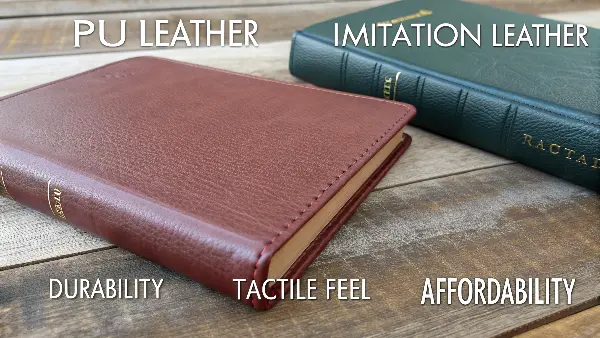
Choosing the right cover is a major decision for any publication, especially for cherished items like Bibles, prayer books, or journals. The cover is the first thing a customer interacts with. It sets their expectation for the quality inside. Getting this detail right ensures the final product not only looks good on the shelf but also holds up to years of devotional use. Let’s break down the materials to help you make the best choice for your product line.
What is the difference between PU leather and imitation leather?
Have you ever felt confused when suppliers use "PU leather" and "imitation leather" as if they are the same thing? You need to know exactly what you’re buying to ensure it meets your quality specs. This confusion can lead to ordering a material that feels cheap or doesn’t perform as you expected.
Think of "imitation leather" as the general family name for all synthetic leathers. This category includes everything from high-end synthetics to basic plastics. PU (polyurethane) leather, on the other hand, is a specific member of that family. It is generally considered a higher-grade material than other types like PVC. PU is softer, more flexible, and more breathable, making it much closer in feel and appearance to genuine leather. So, all PU is imitation leather, but not all imitation leather is PU.
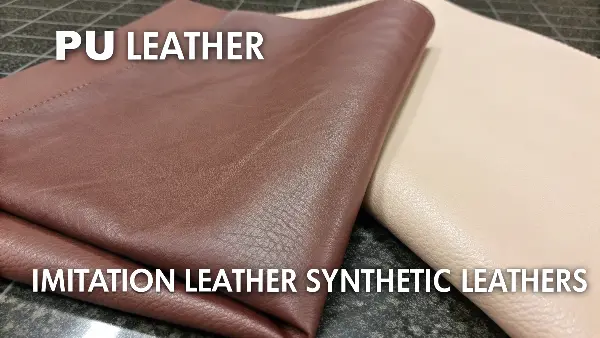
In my experience working with buyers, this distinction is one of the most important things to get right. It directly impacts the perceived value of your final product. A customer holding a book with a soft, supple PU cover will have a completely different experience than one holding a book with a stiff, plastic-like PVC cover. Even though both are technically "imitation leather," the quality difference is day and night.
For religious publications, which are often held for long periods, the tactile feel is critical. I always advise my clients to be very specific in their purchase orders. Don’t just ask for "imitation leather." Specify "PU leather" if that’s what you want. You can even go a step further and request specs on the fabric backing (like woven, non-woven, or knitted) and the thickness of the PU coating. This level of detail ensures there are no surprises when your shipment arrives. It protects your brand’s reputation and makes sure your customers receive a product that feels as good as it looks.
Understanding the Materials
Here is a table to break down the key differences:
| Feature | PU (Polyurethane) Leather | Other Imitation Leathers (e.g., PVC) |
|---|---|---|
| Composition | Polyurethane coating on a fabric base | Polyvinyl chloride coating on a fabric base |
| Feel & Texture | Soft, flexible, and supple | Stiffer, smoother, more plastic-like |
| Breathability | Microporous structure allows some air flow | Non-porous, does not breathe |
| Durability | Good resistance to abrasion and tearing | Very durable, but can crack in cold |
| Appearance | More closely mimics genuine leather grain | Can look more artificial and shiny |
| Common Use | High-quality Bibles, journals, planners | Budget book covers, binders, upholstery |
Knowing this helps you specify exactly what you need from a supplier like us at Panoffices. When you tell me you need a cover for a premium Bible, I immediately think of our best PU options, not the cheaper alternatives.
What is the difference between genuine leather and imitation leather Bibles?
Your customers expect a Bible to be a lifelong companion, but should you choose genuine leather or a modern imitation? Genuine leather has a traditional appeal and a high perceived value. However, its high cost and maintenance needs can be a major hurdle. This makes it challenging to hit the right price point for your target market.
The main difference lies in material origin, durability, and cost. Genuine leather Bibles use animal hide, offering a unique grain, a rich smell, and the ability to develop a beautiful patina over time. They are very durable but also expensive and require care. Imitation leather Bibles use synthetic materials like PU, providing a consistent appearance, excellent durability, and water resistance at a much lower cost. They offer a premium look without the high price and maintenance of real leather.
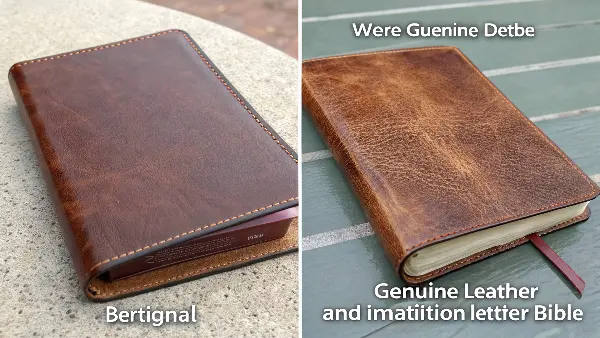
I’ve worked with many brands launching religious publications, and this is a central question we always discuss. A few years ago, a client was developing a new study Bible for young adults. They were initially set on genuine leather because they wanted it to feel like a premium, traditional product. However, when we ran the numbers, the final retail price was much higher than their target audience could afford.
We decided to prototype the same Bible using one of our high-quality PU leathers. We chose a material with a soft touch and a subtle grain that looked incredibly close to the real thing. The client was amazed. The PU version felt substantial and looked elegant, but it brought the production cost down by nearly 40%. They launched with the imitation leather cover, and it became a bestseller. They were able to deliver a beautiful, durable Bible at a price that was accessible to their customers. This is a perfect example of how modern synthetics can achieve both quality and commercial success.
Key Factors for Buyers
When you are deciding between the two, think about these three areas:
-
Audience and Price Point: Who is the end user? A scholar or pastor might invest in a goatskin leather Bible that lasts a lifetime. A student or a young family might prefer a durable, affordable, and stylish PU leather Bible. Your target price point is often the deciding factor.
-
Aesthetics and Branding: What is your brand’s identity? If you are a luxury brand, you might lean toward genuine leather. If your brand focuses on modern design, accessibility, and even vegan-friendly products, a high-quality imitation leather is a perfect fit. The consistency of imitation leather is also a huge plus for large production runs, as every cover will look and feel the same.
-
Use Case and Durability: How will the Bible be used? A Bible that sits on a shelf might be fine with a delicate cover. But a Bible meant for daily carry, travel, and study needs to resist scuffs, spills, and bending. Modern PU leather excels here. It’s easy to clean, water-resistant, and maintains its appearance without needing special conditioners.
Understanding these factors will help you make a strategic choice rather than just a material one.
What is the best kind of leather for a Bible?
When you decide to use genuine leather, you face another set of choices. Not all leathers are created equal, and picking the wrong one can be a costly mistake. You might choose a leather that looks great initially but doesn’t hold up to daily use, or one that is too expensive for your market.
For premium Bibles, the best genuine leather is often full-grain goatskin or calfskin. Goatskin is renowned for its combination of softness, strength, and light weight, with a distinctive grain that makes each Bible unique. Calfskin is exceptionally smooth and soft, giving a very luxurious feel. For a balance of quality and cost, top-grain cowhide is also an excellent and durable choice. The "best" leather ultimately depends on balancing luxury, durability, and your target cost.
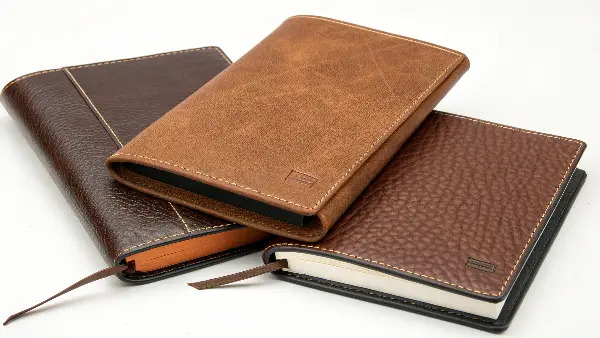
Choosing the right leather is a craft in itself. I remember a project where we were sourcing for a commemorative Bible edition. The client wanted the absolute best. We explored several options and settled on a specific type of Nigerian goatskin. The material was incredibly supple and had a beautiful, tight grain pattern. When the final Bibles were produced, the quality of the leather was the standout feature. It was flexible enough that the Bible could be rolled up without creasing the cover.
However, for most large-scale projects, such top-tier materials are not practical. Price and availability become major concerns. This is where different grades of cowhide come into play. Top-grain leather, where the surface has been sanded to remove imperfections, offers a great balance. It’s more uniform and more affordable than full-grain leather but still very durable. We often use it for mid-to-high-range Bible series. It provides that genuine leather experience without the extreme cost of goatskin, making it a reliable and popular choice for many publishers.
Genuine Leather: A Practical Breakdown
Let’s look at the options in more detail to help you decide.
| Leather Type | Key Characteristics | Best For | Price Point |
|---|---|---|---|
| Full-Grain Goatskin | Very soft, strong, lightweight, flexible, visible and unique grain. Ages beautifully. | Premium, heirloom-quality Bibles. | Very High |
| Full-Grain Calfskin | Extremely soft and smooth to the touch. Luxurious feel, but more delicate. | Deluxe and gift editions. | High |
| Top-Grain Cowhide | Durable, strong, and more uniform in appearance. The most common high-quality option. | Study Bibles, pew Bibles, personal use. | Medium-High |
| Bonded Leather | Made from leftover leather scraps and fibers bonded with polyurethane. | Budget-friendly Bibles. | Low |
You’ll notice "Bonded Leather" at the bottom. While technically derived from leather, its performance is very different. It is not as durable as top-grain leather and can be prone to peeling over time because it’s a composite material. For a product meant to last, I almost always recommend choosing top-grain cowhide over bonded leather. Or, even better, choose a high-quality PU leather, which will often outperform bonded leather in terms of durability and feel, while offering a similar price point.
What is the best material for a Bible cover?
After reviewing all the options, we arrive at the final question: what is truly the best material? The answer isn’t simple, as it depends entirely on your goals. You might be pulled between the tradition of leather, the cost-effectiveness of paper, and the modern appeal of synthetic options.
There is no single "best" material, but high-quality PU leather is often the most strategic choice for modern Bible publishing. It delivers the premium look and feel of genuine leather, offers superior durability and water resistance for daily use, and comes at a fraction of the cost. This allows publishers to create a beautiful, long-lasting product that is accessible to a wide audience. For specific use cases, hardcover or genuine leather may be better, but PU offers the best overall balance.
I always guide my clients through a final decision-making framework. I ask them: "What is your top priority? Is it tradition, price, durability, or design?" A publisher creating a limited-edition anniversary Bible might prioritize the tradition of genuine goatskin. A church buying pew Bibles in bulk will prioritize the durability and cost-effectiveness of a hardcover.
However, for the vast majority of my clients—brands like the one Michael works for in Germany—the goal is to create an excellent product for the consumer market. They need something that looks and feels great, holds up to wear and tear, and hits a specific retail price. In this scenario, nine times out of ten, we land on a premium PU leather. It’s the smartest business decision. It maximizes perceived value for the customer while protecting the publisher’s profit margin. It’s a versatile material that can be finished in countless colors and textures, allowing for complete design freedom. It truly represents the best of both worlds: classic aesthetics and modern performance.
Final Material Comparison
To make your final decision, consider your primary goal.
- For Tradition and Ultimate Luxury: Choose Full-Grain Goatskin or Calfskin. Nothing beats the feel and legacy of premium genuine leather. Be prepared for a high cost and the need for customer education on care.
- For Durability and Institutional Use: Choose a Hardcover (Cloth-Over-Board). This is the workhorse option, perfect for Bibles that will see heavy use in schools, churches, or libraries. It is cost-effective and extremely resilient.
- For the Best Overall Balance: Choose High-Quality PU Leather. This is the champion for the modern market. It gives you a product that feels luxurious and is built to last, all at a manageable price. It offers immense flexibility in design and is a reliable, consistent material for large production runs.
At Panoffices, we have deep expertise in sourcing and manufacturing with all these materials. We can help you navigate the options and create samples so you can feel the difference for yourself. Your choice of cover is a message to your customer about the quality and care you put into your products.
Conclusion
Choosing the right cover material comes down to understanding the trade-offs between tradition, performance, and price. While genuine leather offers unmatched luxury, high-quality PU leather often emerges as the most strategic choice. It provides a premium feel, excellent durability, and budget-friendliness, helping you create a product that delights customers and makes good business sense.
