
Sourcing a high-quality Study Bible is one of the hardest tasks for a buyer. You have likely seen samples where the text bleeds through or the spine breaks. This creates a bad experience for the user. We need to focus on precision manufacturing to solve these common quality issues.
Producing a Study Bible requires a perfect balance of high-opacity thin paper, precise typesetting, and durable binding. Manufacturers must integrate main scripture, footnotes, and cross-references on a single page without visual clutter. This involves using advanced computer-to-plate technology to ensure alignment and readability. Successful production ensures that the complex reference system remains user-friendly and the book withstands years of daily study.
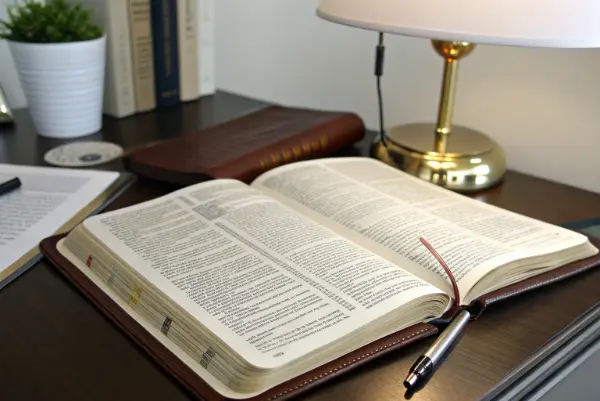
I remember walking through a printing floor last year and seeing the sheer complexity of a Bible production line. It is very different from printing a standard notebook or novel. The margins for error are tiny. If the machine is off by a fraction of a millimeter, the cross-references get cut off. I want to take you through the specific challenges we face and how we solve them to create a premium product.
How Does Complex Typesetting Affect the Production Process?
A cluttered page makes studying difficult. Readers get confused by too many numbers and notes. We have to organize massive amounts of data clearly.
Complex typesetting requires balancing the main scripture, commentary, and side-column references on a strict grid. Factories use specialized software algorithms to prevent "widows" and "orphans" in the text block. This process ensures that the commentary on the bottom matches the scripture above it perfectly. It is not just about placing text; it is about creating a visual hierarchy that guides the reader’s eye naturally.
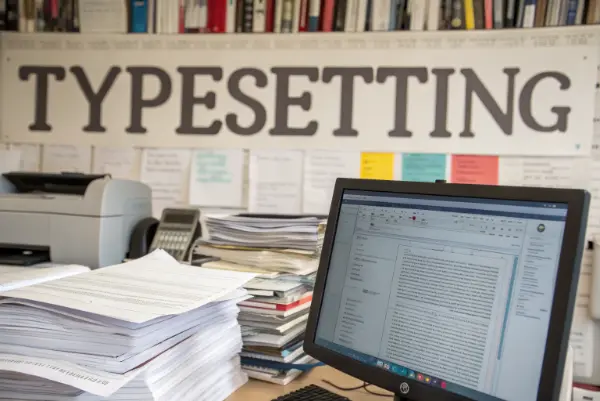
When we look at the layout of a Study Bible, we are looking at a piece of architecture. The "Dive Deeper" aspect here is crucial because the layout dictates the manufacturing cost and the user experience. I have worked with designers who try to cram too much onto one page. The result is always a book that is hard to read. We have to use a grid system. This system divides the page into specific zones. Zone A is for scripture. Zone B is for cross-references, usually in the center or side column. Zone C is for the study notes at the bottom.
The real challenge in production is "text matching." The study notes at the bottom of page 45 must relate to the scripture on page 45. If the scripture runs long and pushes onto page 46, the notes must move too. Standard book formatting software often fails here. We use dedicated typesetting scripts that dynamically adjust the text flow. This prevents large white spaces at the bottom of the page. It also stops the font size from becoming too small.
We also have to consider the font selection carefully. A serif font is usually best for the main text because it is easier for the eye to follow. We might use a sans-serif font for the notes to create a visual distinction. This helps the reader separate the "God’s word" from the "man’s commentary."
Layout Considerations for Buyers
| Feature | Standard Book | Study Bible |
|---|---|---|
| Grid System | Single column usually | Multi-column (2-3 zones) |
| Font Styles | 1-2 styles max | 3-4 styles for hierarchy |
| Margins | Wide for aesthetics | Narrow for space efficiency |
| Alignment | Top to bottom | Dynamic text matching |
Why Is Paper Selection Critical for Heavy Reference Books?
Thick books are heavy and hard to carry. But thin paper often shows the ink from the other side. This is the biggest trade-off in Bible production.
Paper selection is the foundation of a good Study Bible and dictates the final thickness. You must choose low-GSM paper that is thin yet opaque to prevent ink bleed-through. This is often called "Bible paper" and usually ranges from 28gsm to 40gsm. High titanium dioxide content helps increase opacity, allowing you to print on both sides without the text from the back showing through.
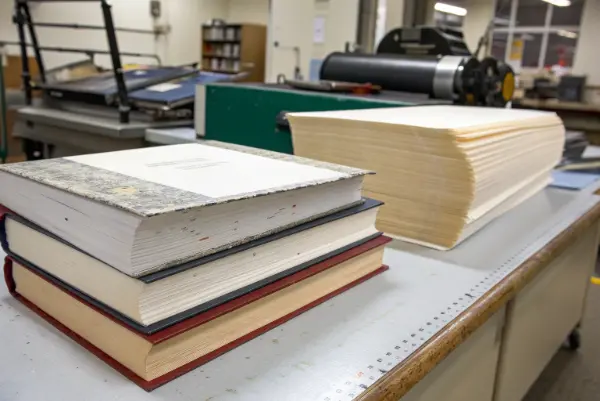
I cannot stress enough how important paper opacity is. In the industry, we call the annoying effect of seeing text from the reverse side "ghosting." For a Study Bible, ghosting is a disaster. The pages are dense with text. If you can see the lines from page 102 while reading page 101, the brain gets tired. The reading experience drops significantly.
To fix this, we do not just look at the weight of the paper (GSM). We look at the opacity rating. A standard notebook might use 80gsm paper. A Study Bible might use 30gsm paper. To make that 30gsm paper opaque, the paper mill adds a mineral called titanium dioxide to the pulp. This coats the fibers and blocks light. However, this also makes the paper more expensive. As a buyer, you have to decide where the value lies. Is it worth paying more for 86% opacity versus 82% opacity? In my experience, for a premium product, the answer is always yes.
Another factor is the coating. We often use a specialized coating that accepts ink crisply. Study Bibles often have maps or charts in color. If the paper is too porous, the ink spreads. This makes fine text look fuzzy. We need a surface that holds the dot of ink precisely. This allows for sharp footnotes even at a 6-point font size.
Finally, we must talk about "grain direction." The grain of the paper must run parallel to the spine of the book. If the grain runs the wrong way, the pages will resist turning. They will want to stand up or snap shut. For a book with 2,000 pages, the pages must flow like fabric.
Paper Specification Breakdown
| Paper Type | Weight (GSM) | Opacity Rating | Best Use Case |
|---|---|---|---|
| Standard Offset | 70-80 gsm | 90%+ | Standard non-fiction |
| Economy Bible | 40-45 gsm | 80-84% | Pew Bibles, budget runs |
| Premium Bible | 28-36 gsm | 85-88% | High-end Study Bibles |
| Coated Map | 80-100 gsm | 95%+ | Full-color inserts/maps |
What Binding Techniques Ensure Longevity for Thick Volumes?
A heavy book puts a lot of stress on the spine. If the glue dries out, pages fall out. A Study Bible needs to last a lifetime.
Durability comes from Smyth sewn binding, which is the gold standard for Bibles. This method involves sewing signatures together with thread rather than just gluing them. It allows the book to lay flat when open, which is essential for study. For high-end productions, we add edge gilding and reinforced headbands. This protects the pages from dust and moisture while keeping the structural integrity of the heavy text block intact.
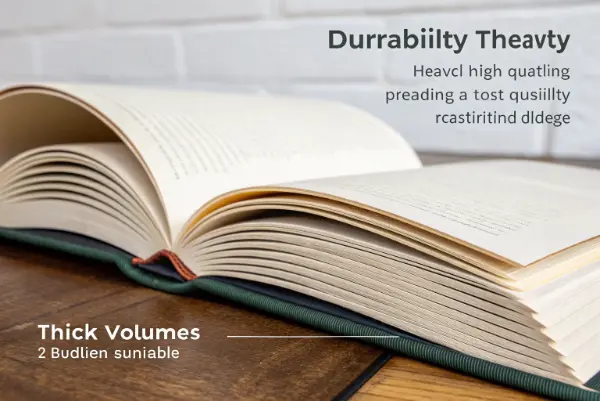
When I inspect a Study Bible, the first thing I do is open it to the middle and lay it on the table. If it snaps shut, it fails the test. A student or pastor needs the book to stay open on a desk while they take notes. This is where "Smyth sewing" creates value. In this process, we gather the folded pages into groups called signatures. We sew these signatures together physically. This is different from "perfect binding," which is what you see on a paperback novel. Perfect binding just cuts the spine and uses hot glue. That glue eventually cracks.
For a book that is 5 centimeters thick, the physics are demanding. We use a flexible cold glue called PVA in addition to the sewing. This glue moves with the book. It does not become brittle. This is vital for markets with varying climates. A Bible shipped to a humid country or a dry country needs to hold up equally well.
We also have to look at the cover attachment. This is called "casing in." For premium Bibles, we often use "paste-down" or "edge-lined" binding. Edge-lined binding is the strongest. The liner of the cover is not just pasted to the first page; it is tabbed directly onto the book block. This distributes the weight of the heavy paper block. It prevents the cover from ripping off after years of gravity pulling on it.
We also cannot ignore the cover material itself. Genuine leather is the traditional choice, but high-quality PU (polyurethane) is very popular now. It offers a soft touch and durability at a better price point. It can be heat-stamped with beautiful designs.
Binding Methods Comparison
| Binding Style | Lay-Flat Ability | Durability | Cost |
|---|---|---|---|
| Perfect Bound | Poor | Low | Low |
| Smyth Sewn | Excellent | High | Medium |
| Paste-Down | Good | Medium-High | Medium |
| Edge-Lined | Superior | Extreme | High |
How Can Accessories Enhance the Functionality of Study Bibles?
A big book is hard to navigate. Users lose their place easily. We need to add tools that make the system usable.
Accessories like ribbon markers and thumb indexing are vital for navigation in a complex book. A good Study Bible should have at least two or three distinct ribbons to mark different passages. Thumb indexing cuts must be precise to avoid tearing the delicate paper. These features add value to the product and make the complex reference system usable. They transform a standard book into a functional daily tool.
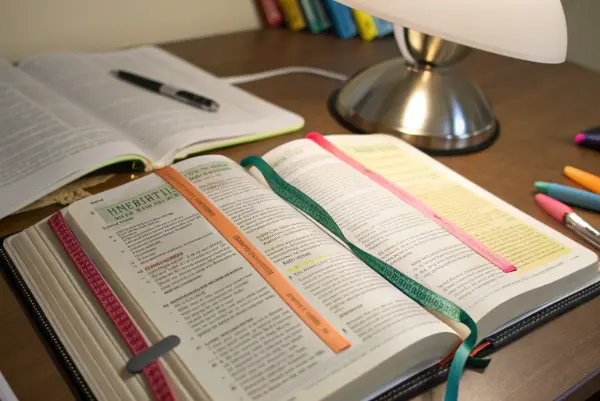
We often overlook the small details, but they matter the most in daily use. I always recommend multiple ribbon markers for Study Bibles. One ribbon is for the Old Testament, one for the New Testament, and one for the current study topic. The manufacturing challenge here is inserting them securely. The ribbons are glued into the spine before the cover goes on. We have to make sure the glue does not bleed onto the headbands. We also heat-seal the ends of the ribbons. If we do not, they fray within weeks.
Thumb indexing is another complex step. This is where we cut half-circle scoops out of the side of the page to show the books of the Bible. This is done after the book is bound. It is a high-risk operation. If the blade is dull, it rips the thin Bible paper. If the alignment is wrong, you cut into the text. We use specialized die-cutting machines that are calibrated to the millimeter. We often apply a gold or silver foil to these tabs to reinforce the paper and make them visible.
Storage is another feature to consider. Many modern Bibles now include a back pocket. This is great for holding church bulletins or loose notes. Adding this pocket requires manual labor in the assembly line. It increases the unit cost, but it adds a lot of perceived value.
Finally, we consider the elastic closure. This keeps the book closed and protects the pages when it is thrown into a bag. The tension of the elastic must be right. Too tight, and it bends the cover. Too loose, and it falls off.
Essential Accessories for Functionality
| Accessory | Purpose | Manufacturing Key |
|---|---|---|
| Ribbon Markers | Marking multiple pages | Heat-sealed ends |
| Thumb Index | Quick navigation | Reinforced foil tabs |
| Back Pocket | Storage for notes | Durable adhesive |
| Elastic Band | Protection during travel | Correct tension |
Conclusion
Producing a Study Bible is a feat of engineering as much as it is printing. We have to combine the thinnest paper with the heaviest content layout. By focusing on opacity, precise grid systems, and Smyth sewn binding, we create a product that honors the content. It ensures the user can study effectively for years.
