
Hymnals and songbooks face a tough life. They are opened and closed hundreds of times, dropped in pews, and held for hours by choir members. If you choose the wrong binding, the pages will fall out within a year. This leads to complaints and expensive replacements. You need to pick a binding method that lasts.
The most durable binding option for hymnals and songbooks is Smyth sewing (section sewing). This method physically stitches folded groups of pages together with thread before gluing them into the spine. Unlike standard adhesive binding, sewn books do not crack when opened wide. This allows the book to lie completely flat, which is essential for musicians and singers who need to keep their hands free.
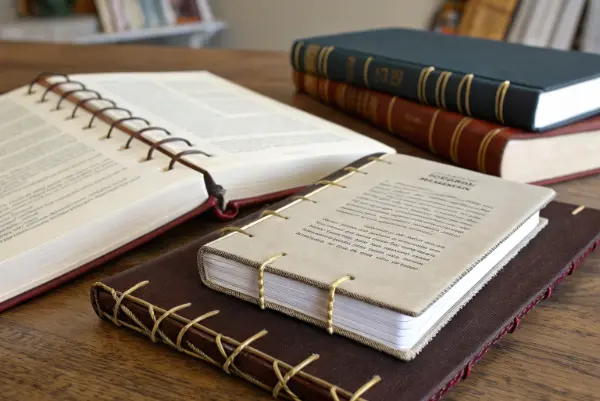
I have seen many buyers make the mistake of choosing a cheaper binding method to save money upfront. They usually regret it when the books start falling apart after a few months of heavy Sunday use. Let’s look at the specific options that ensure quality and longevity.
Why is Smyth sewing considered the gold standard for hymnals?
Many people think glue is enough to hold a book together. But glue dries out and cracks over time, especially in books that are forced open. You need a mechanical bond for heavy use.
Smyth sewing creates the strongest possible bond because the pages are physically tied together with thread. Groups of folded pages, called signatures, are stitched through the fold and then sewn to each other. This creates a flexible spine that can handle repeated opening and closing without putting stress on the adhesive, making it the only true choice for archival-quality songbooks.
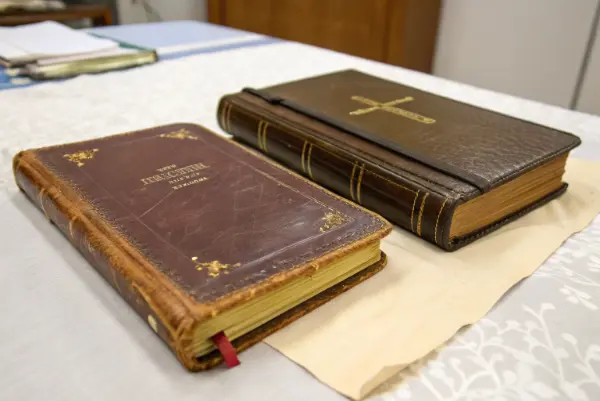
When I work with clients at Panoffices, I always insist on Smyth sewing for any book intended for worship or music. We need to look closely at why this works better than the alternatives. In the factory, we feed the paper into a machine that folds large sheets into sixteen or thirty-two-page sections. These are the "signatures." A normal perfect-bound book just chops the spine off and adds glue. That is cheap, but it is weak.
Smyth sewing preserves the fold. A needle passes thread through the center of each signature and links it to the next one. This creates a chain link effect across the spine. The result is incredible flexibility. You can place a Smyth-sewn hymnal on a music stand, and it stays open. It does not try to snap shut like a mouse trap. For a pianist or a choir member holding a candle in one hand, this "lay-flat" ability is not a luxury; it is a requirement.
I also want to mention the long-term value. Yes, sewing adds to the production cost. It takes more time and specialized machinery. But think about the replacement cycle. A glued book might last two years in a church pew. A sewn book can last twenty years. Here is a simple breakdown of the binding types we see in the market:
| Binding Type | Durability | Lay-Flat Ability | Cost | Recommended Use |
|---|---|---|---|---|
| Smyth Sewing | Excellent | Excellent | High | Hymnals, Reference, Textbooks |
| Perfect Binding (PUR) | Good | Poor to Fair | Low | Paperbacks, One-time reads |
| Wire-O / Spiral | Fair | Excellent | Medium | Music workbooks (flimsy for pews) |
If you are building a product for a market that demands quality, like the European market Michael works in, sewing is the only option that signals "premium" instantly.
How do hardcovers compare to flexible softcovers for church use?
The cover protects the internal pages, but it also adds weight. You have to balance the need for armor against the comfort of the person holding the book.
Hardcovers (case binding) offer the best protection against drops and rough handling, making them ideal for books that stay in the pews permanently. However, flexible softcovers made from high-quality PU leather or heavy cardstock are significantly lighter. These are often better for choir members who must hold the book up for long periods during a performance.
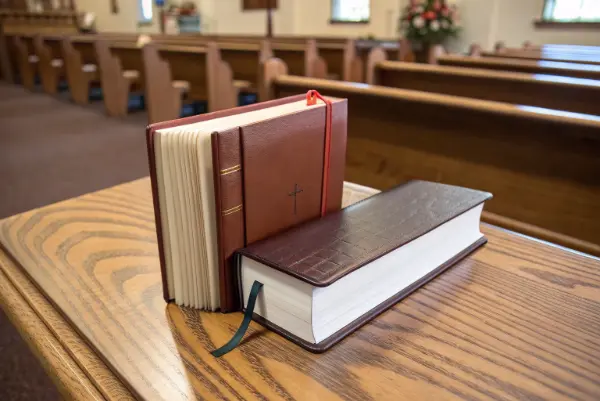
Deciding between a hard case and a flexible cover is one of the biggest discussions I have with my manufacturing team. It really depends on who is using the book. For a general pew edition, I almost always recommend a hard case. We use a rigid greyboard, usually 2.5mm or 3mm thick. This board acts like a shield. If a child drops the book or someone stacks ten other books on top of it, the pages inside do not get crushed. The hard spine also looks very neat when lined up on a shelf or in a rack.
However, we are seeing a shift toward "Flexibound" or flexible covers for personal copies and choir editions. Imagine holding a heavy 500-page hardcover book at chest level for a ten-minute anthem. Your arms get tired. A flexible cover reduces the weight of the greyboard. We often use a heavy cardstock cover or a single layer of PU (polyurethane) leather. This material feels soft and premium, almost like a Bible. It bends in the hand, making it more comfortable to grip.
We also need to talk about the outer wrapping material.
- Printed Paper (Laminated): This allows for full-color artwork. We apply a "anti-scratch" matte lamination so rings and watches don’t mark the cover.
- Cloth/Linen: This is traditional and beautiful. It feels organic and stops the book from sliding off a lap. However, it can get dirty easily if not handled with clean hands.
- Leatherette/PU: This is my favorite for high-end stationery. It is water-resistant, durable, and handles foil stamping beautifully.
At Panoffices, we often suggest a mix. Produce the bulk of the order in hardcover for the pews, and a smaller run of flexible luxury covers for the worship leaders and choir.
What role does paper grain direction play in book longevity?
You can have the best binding and the strongest cover, but the book will still fail if the paper is wrong. The physical structure of the paper sheet determines how the pages turn.
Paper grain direction is the single most critical technical detail in book manufacturing; the grain must run parallel to the binding spine. If the grain runs perpendicular (cross-grain), the pages will be stiff, they will resist turning, and the leverage created will eventually break the binding spine. Always specify "grain long" for standard portrait books to ensure a fluid, soft opening.
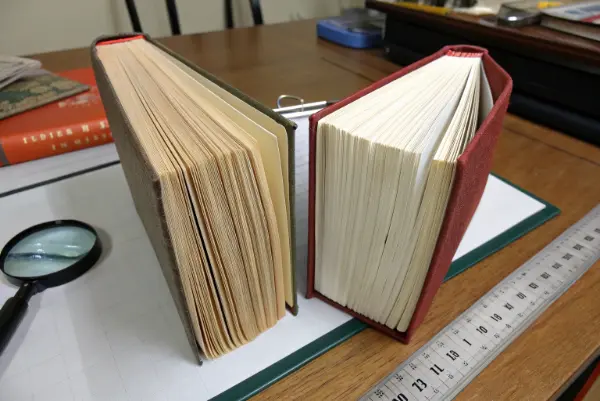
I cannot stress this enough: grain direction is where many factories try to cut corners. Paper comes in giant rolls or sheets. Sometimes, to save waste, a factory will cut the paper so the grain runs the wrong way. Most clients never notice until they get the finished product. They open the book, and the pages feel "springy." They stand up on their own. When you try to smooth the page down, the paper buckles near the gutter. This is a disaster for a musician trying to read notes.
In my years of sourcing stationery, I have learned that for hymnals, the paper must drape. When you turn a page, it should fall flat onto the next page with zero resistance. This happens when the wood fibers in the paper align with the spine. If the fibers run across the spine, you are bending thousands of tiny straws every time you turn a page. This creates tension. Over thousands of page turns, this tension pulls against the thread and glue in the spine. Eventually, the book breaks.
We also need to discuss paper opacity and weight.
- Opacity: Music notation has high contrast (black notes on white paper). If the paper is too thin, you see the notes from the next page (show-through). This is confusing for the eye. We need high opacity.
- Weight: Standard copier paper is 80gsm. For a songbook, 80gsm is okay, but 100gsm is better for opacity. However, 100gsm makes a very thick, heavy book if you have 600 pages.
- Coating: Never use glossy paper for songbooks. The stage lights or church lighting will reflect off the page, creating glare. You must use uncoated wood-free paper or a matte finish.
I always verify the "drape test" on our sample production runs. I hold the book open. If the pages lie flat and relaxed, the grain is correct. If they wave at me, we stop production.
What custom features add value and usability to a worship book?
A songbook is a tool, not just a reading book. Users need to find songs quickly and keep their place during a service. Small additions make a huge difference in functionality.
Functional features like ribbon markers, headbands, and rounded corners significantly increase the usability and lifespan of a hymnal. Ribbon markers allow singers to prepare the next song in advance, while rounded corners prevent the sharp edges of the cover from fraying or peeling after years of friction. These details turn a basic printed item into a professional tool.
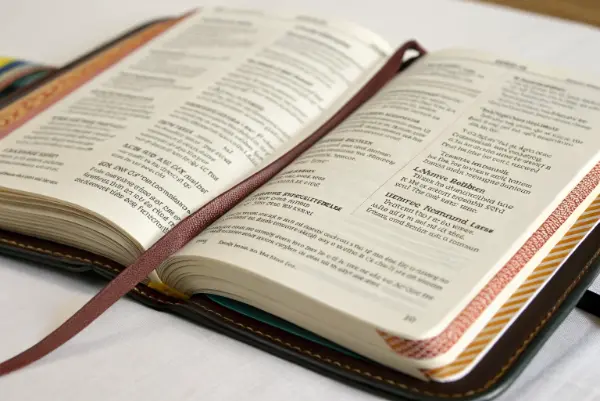
When we design products at Panoffices, we look at "pain points." One big pain point in a church service is fumbling to find the right page number while the music is already starting. This is why Ribbon Markers are essential. For a hymnal, I recommend at least two ribbons, preferably in different colors (e.g., one red, one gold). This allows the user to mark the opening hymn and the communion song at the same time. We heat-seal the ends of the ribbons so they do not fray.
Another feature that looks cosmetic but is actually structural is the Headband and Tailband. These are the small pieces of colored cloth you see at the very top and bottom of the spine. While they look nice, they also hide the glue and the edges of the folded signatures. They protect the top of the spine from dust and from fingers pulling the book off a shelf by the spine cap.
Let’s talk about Rounded Corners. If you look at an old library book, the first thing to go is usually the corners. They get bumped, the cloth peels back, and the cardboard gets soft. By die-cutting the corners of the book block and the cover to a radius (usually 3mm to 5mm), we deflect impact. The book slides into a bag or a pew rack more easily. It stays looking new for much longer.
Finally, consider the Endpapers. These are the sheets glued to the inside of the cover. For a heavy book, standard paper is not enough. We use reinforced, heavy-weight stock (140gsm+). This is the hinge that holds the heavy book block to the cover. If this paper tears, the cover falls off. I often suggest using colored or printed endpapers here to add a touch of branding or beauty to the opening experience. It is a small cost for a much stronger product.
Conclusion
Creating a hymnal or songbook that lasts for decades requires specific manufacturing choices. You must use Smyth sewing for the binding to ensure durability and lay-flat use. You should choose between hardcovers for protection or flexible covers for handling comfort. The paper grain must run parallel to the spine, and adding ribbons and rounded corners improves usability. At Panoffices, we understand these technical details and can help you build a product that stands the test of time.
