
Children can be very tough on their books. They throw them, chew on them, and pull the pages, which creates a huge problem for publishers who want to sell high-quality religious texts. If the bible falls apart after one week, the parents will be unhappy, and your brand reputation will suffer.
To solve this, you must choose durable materials like heavy greyboard and C1S art paper, combined with strong binding methods like Smyth sewing or board book mounting. You also need to add special features like gold foiling or die-cut handles to make the product stand out on the shelf and justify a higher price point.
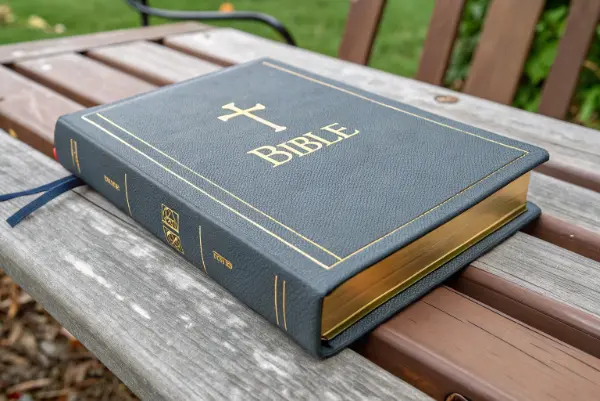
Many buyers focus only on the price of printing, but they forget about the longevity of the book. I have seen many beautiful designs fail because the physical structure was too weak for a toddler’s hands. In this article, I will walk you through the technical choices that make a children’s bible both safe and long-lasting.
Which Materials Ensure the Best Durability for Young Readers?
Standard paper is simply too thin for young children and will rip almost immediately. This leads to frustrated customers and a high rate of product returns for retailers. You cannot treat a children’s bible the same way you treat a novel for adults.
The best material choice is usually a "board book" construction using two sheets of C1S art board pasted together, or a hardcover case bound with 157gsm art paper over 2.5mm greyboard. For the internal pages of a standard hardcover, you should never go below 128gsm art paper to ensure it resists tearing.
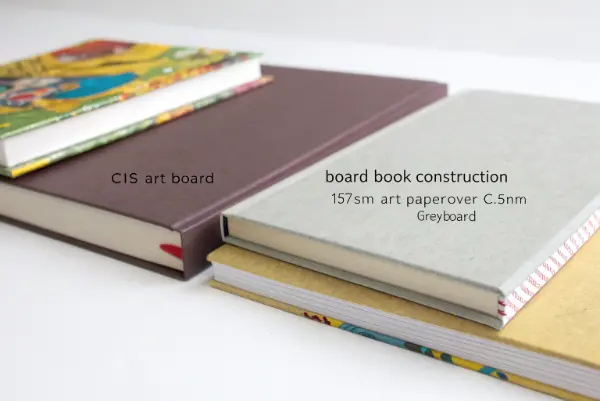
When we manufacture children’s bibles at Panoffices, we start with the core of the book. The choice of paper is the most critical decision you will make. For the youngest demographic (ages 0-3), standard paper is not an option. We almost always recommend a board book format. This involves printing on thick cardstock, usually around 300gsm to 400gsm C1S (Coated One Side) art board.
However, durability is not just about the thickness of the paper. It is also about the coating. Children often eat while reading, or they might spill juice on the pages. If the paper is uncoated, that liquid soaks in and ruins the book. I always advise my clients to apply a full lamination or a heavy varnish. Gloss lamination is generally more durable and easier to wipe clean than matte lamination, which can show scratches.
If you are producing a bible for slightly older children (ages 4-7), you might choose a standard hardcover format. In this case, the cover board needs to be rigid. We typically use a 2.5mm or 3mm greyboard. This board prevents the cover from bending or warping over humidity changes during shipping. For the text block (the inside pages), using 157gsm matte art paper gives a premium feel and is thick enough to turn easily without tearing.
Here is a simple breakdown of material recommendations based on age groups:
| Age Group | Recommended Format | Material Specification | Surface Finish |
|---|---|---|---|
| 0-3 Years | Board Book | 350gsm C1S Art Board x 2 layers | Gloss Lamination (Wipeable) |
| 3-5 Years | Padded Hardcover | 128gsm Art Paper text block | Matte Lamination + Spot UV |
| 5-8 Years | Standard Hardcover | 100gsm Wood-free Paper | Anti-scratch Matte Lamination |
You also need to think about the grain direction of the paper. If the grain is wrong, the book will not open flat, and the binding will experience more stress. I always check the grain direction before we start mass production to ensure the book opens naturally.
What Binding Methods Withstand Frequent Use?
If the pages fall out of the book, the quality of the paper does not matter. Glue dries out over time, and rough handling by children will crack a weak spine very quickly. This is the most common failure point I see in cheap manufacturing.
For maximum durability, Smyth sewn binding (thread sewing) is the superior choice for hardcovers because it mechanically locks the pages together. For board books, the self-cased mounting method is essential, where each page is glued back-to-back to create a solid, indestructible block.
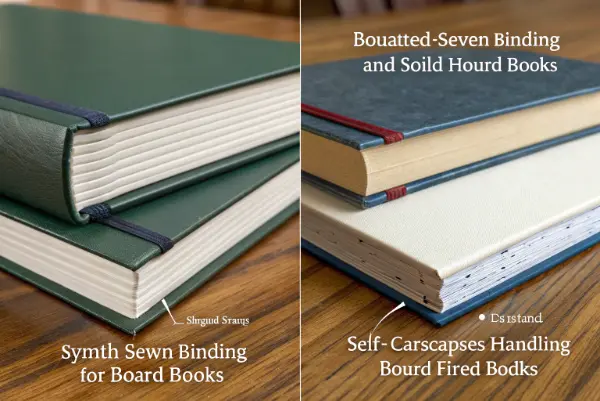
Binding is where a lot of manufacturers try to save money, but it is a dangerous place to cut costs. In the world of stationery and book printing, there are three main types of binding: saddle stitch, perfect binding (glue only), and section sewn (Smyth sewn). For a children’s bible, you should almost never use perfect binding. The glue is strong, but when a child forces the book open flat, the spine will crack, and pages will detach.
I strongly recommend Smyth sewn binding for any hardcover bible. In this process, the printed sheets are folded into signatures (groups of pages). Then, a machine runs a thread through the center fold of each signature and sews them all together. This creates a flexible spine. You can open the book 180 degrees, and the pages will not fall out. It costs a little bit more than glue binding, perhaps a few cents per unit, but it extends the life of the product by years.
For board books, the process is different. We do not use thread. Instead, we print on one side of a thick card. We then fold that card in half. We glue the back of one folded card to the back of the next folded card. This is called "mounting." The result is that every "page" is actually two layers of thick card glued together. This makes the book incredibly rigid. It is basically a brick of paper. A child can step on it, throw it, or bite it, and the binding will hold.
Another interesting option is the "Flexibound" cover. This is a hybrid between a paperback and a hardcover. The cover is made of a heavy card stock (around 300-350gsm) that is folded over. It is lighter than a hardcover but more durable than a standard paperback. It often uses Smyth sewing as well. This is a great choice for bibles intended for school-aged children who need to carry them in a backpack. The heavy hardcovers add too much weight, but a Flexibound book is portable and tough.
How Do Special Features Enhance Value and Engagement?
A plain book with just text and pictures can be boring for a child in a digital age. If the book does not look exciting on the shelf, parents will not pick it up. You need to capture their attention instantly.
You should incorporate sensory features like die-cut windows, foil stamping, embossing, or touch-and-feel textures to make the bible interactive. Adding a ribbon marker or a magnetic closure also increases the perceived value of the product significantly.
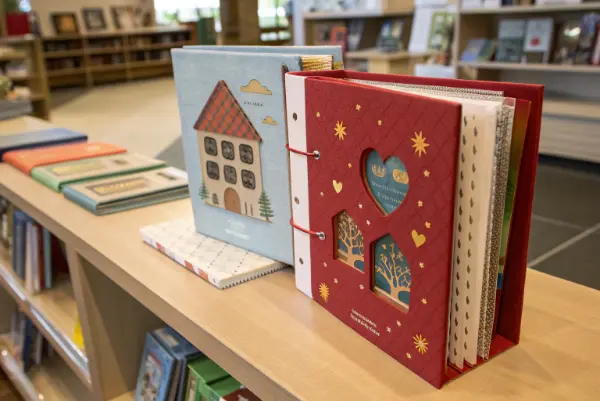
When I work with clients like Michael, we spend a lot of time discussing the "shelf appeal." The manufacturing of the bible is not just about holding pages together; it is about creating an object that feels special. A children’s bible is often bought as a gift for a Christening, First Communion, or birthday. Therefore, it needs to look like a premium gift.
One of the most popular features is "Foiling." We use a heated die to press a metallic foil (usually gold or silver) onto the cover. This catches the light and makes the title pop. For children’s books, we can also use holographic foil, which changes color as you move the book. It is very eye-catching. Another technique is "Debossing" or "Embossing," where we press a design into the cover to give it a 3D texture.
For younger children, interactive elements are key. "Die-cutting" allows us to cut shapes out of the pages or the cover. For example, you could have a bible where the cover has a handle cut out of it, so the child can carry it like a suitcase. Or, you can have "peek-through" holes on the pages that show a character on the next page. These features require precise die-making tools, but they add immense play value.
Let’s look at the impact of these features on production:
- Foam Padding: We can insert a layer of foam between the greyboard and the printed cover paper. This creates a "puffy" cover. It feels soft and safe to hold. It is very popular for toddlers.
- Edge Gilding: This is a classic bible feature where the edges of the paper block are sprayed with gold or silver ink. It looks very traditional and high-end.
- Tabs: Die-cut thumb tabs cut into the side of the pages help readers find specific books of the bible (like Genesis or Matthew). This is practical and adds a professional look.
These features do add to the unit cost. However, they also allow you to sell the product at a much higher retail price. A standard book might sell for $10, but a bible with a padded cover, gold foil, and ribbon marker can easily sell for $20 or $25. The return on investment for these manufacturing extras is very high.
Why Are Safety Standards and Non-Toxic Inks Non-Negotiable?
Safety is the single most important factor when manufacturing products for children. If your product contains harmful chemicals or sharp edges, it will be recalled, and you could face legal action. You cannot compromise on this.
You must ensure that all inks are soy-based and lead-free, and that all materials pass EN71 (Europe) or ASTM (USA) safety tests. Furthermore, physical safety features like rounded corners are mandatory to prevent eye injuries or scratches.
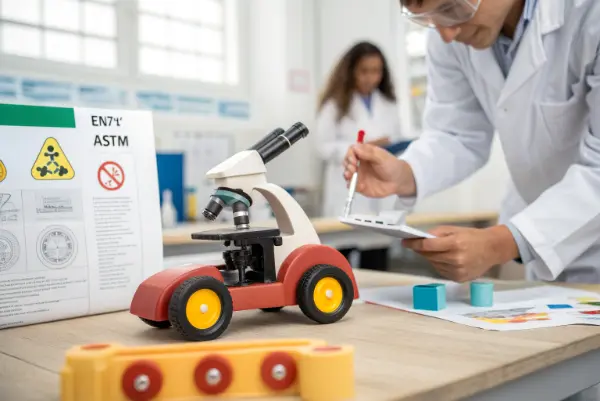
In my experience exporting to Europe and North America, compliance is the first thing a buyer asks about. Before we even discuss the design, we must confirm that our materials are safe. Children, especially those under 3 years old, explore the world with their mouths. They will lick the pages. Therefore, the ink cannot contain heavy metals or toxic solvents.
We use soy-based inks for all children’s products. Traditional petroleum-based inks can release Volatile Organic Compounds (VOCs) and may contain harmful residues. Soy ink is made from soybeans. It is renewable, biodegradable, and safe. It also produces very bright, vibrant colors, which is a nice bonus. All our lamination films and glues are also tested to ensure they are free from phthalates.
Beyond chemicals, we have to look at mechanical safety. A standard hardcover book has sharp square corners. If a toddler falls on the book, those corners can cause a serious injury. That is why we use a "round cornering" machine. This machine trims the sharp points off the board and the paper block, creating a smooth, curved edge. It is a small step in manufacturing, but it is vital for safety compliance.
Here is a checklist of safety aspects we control during manufacturing:
- Ink Safety: Must pass heavy metal testing (Lead, Mercury, Cadmium).
- Paper Bleaching: We use elemental chlorine-free (ECF) paper to avoid harmful dioxins.
- Small Parts: If the bible has glued-on gems or accessories, they must pass a tension test to ensure they do not detach and become a choking hazard.
- Sharp Edges: All wire-o bindings (if used) must be fully enclosed or crimped so no sharp wire ends are exposed.
If you are importing these bibles, you will likely need a "Declaration of Conformity" or a CPC (Children’s Product Certificate). We work with third-party labs like SGS or Intertek to test the finished production samples. We do not ship the goods until we have that pass report. This gives buyers like Michael peace of mind that their product will not get stuck at customs or pulled from shelves.
Conclusion
Manufacturing a successful children’s bible requires balancing durability, safety, and engagement. By selecting thick art boards, using strong Smyth sewn binding, and adding special touches like foil or foam padding, you create a product that parents trust and children love. Always prioritize safety compliance and choose materials that can survive the rough handling of a young reader.
