
Are you trying to source premium leather-bound Bibles but finding it hard to distinguish true quality from cheap imitations? The market is filled with confusing terms, and choosing the wrong product can lead to disappointed customers and a damaged brand reputation. Understanding the real markers of quality is essential to sourcing a product that lasts for generations.
A quality leather-bound Bible is defined by three key elements: the leather, the binding, and the finishing. The best Bibles use durable, supple, full-grain leathers like goatskin or calfskin. They are constructed using Smyth-sewn binding, which allows the book to lay flat and ensures longevity. Finally, details like gilded edges, raised spine hubs, and quality perimeter stitching signal true craftsmanship. It’s this combination of superior materials and time-honored techniques that creates a truly exceptional Bible.
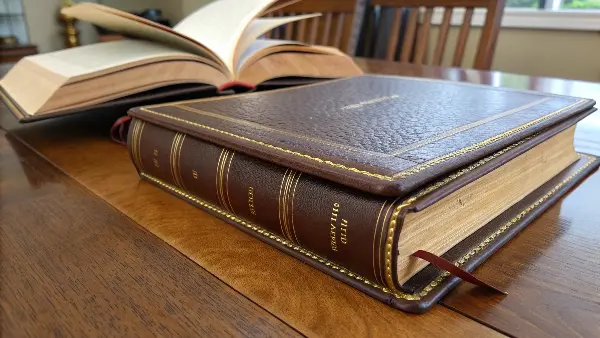
But getting that perfect Bible isn’t just about picking the most expensive leather. There’s a lot more to it, from the specific type of hide to the way the pages are actually stitched together. The world of bookbinding has its own language, and knowing it is the key to making smart sourcing decisions. Let’s break it down so you can evaluate suppliers and products with confidence, ensuring you get the quality your customers deserve.
Is the leather on a "leather-bound" Bible always real leather?
Have you ever picked up a product labeled "genuine leather" and felt a bit skeptical about its quality? You’re right to be cautious. Many mass-market Bibles use materials that technically contain leather but will never match the feel or durability of a high-quality hide. Getting this wrong means sourcing a product that will disappoint customers and fail over time.
Yes, many leather Bibles use real leather, but the term is often misleading. The highest quality Bibles use full-grain or top-grain hides. However, many affordable options use "bonded leather," a composite material made from leather dust and scraps glued together. While technically containing leather, it lacks the durability and character of a genuine hide and is prone to cracking. To ensure quality, look for specific leather types like goatskin, calfskin, or explicitly stated full-grain leather.
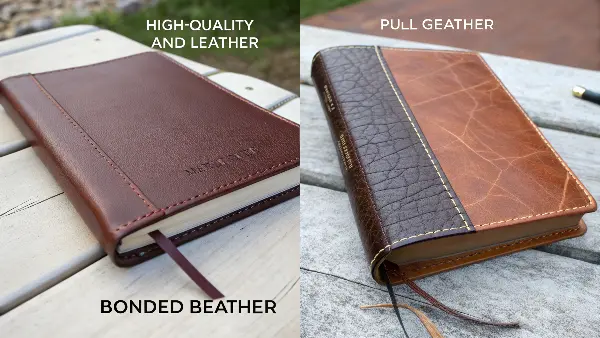
To truly understand what you’re buying, you need to know the leather hierarchy. Not all "real leather" is created equal. A supplier’s choice of material is the first indicator of the final product’s quality. I once worked with a buyer named Michael from a German lifestyle brand who was dismayed when his "leather" journals started peeling. The supplier had used bonded leather, and the poor quality reflected badly on his brand. This experience taught us both the importance of absolute clarity in material specifications.
Here is a simple breakdown of the common types of leather you’ll encounter:
Leather Grades Explained
| Leather Grade | Description | Durability & Feel | Typical Use in Bibles |
|---|---|---|---|
| Full-Grain | The highest quality grade, using the entire outer layer of the hide with all its natural imperfections. | Extremely durable, supple, and develops a beautiful patina over time. | Premium, heirloom-quality Bibles. |
| Top-Grain | The second-highest quality. The surface is sanded to remove imperfections. | Very durable and has a more uniform appearance than full-grain. | High-quality, widely available Bibles. |
| Genuine Leather | A confusing term for leather made from the lower layers of the hide. | Less durable than top-grain; does not age as well. | Mid-to-low-tier Bibles. The quality can be inconsistent. |
| Bonded Leather | Made from leftover leather scraps and dust, shredded and glued onto a backing. | Low durability. Prone to cracking and peeling. | Inexpensive, mass-market Bibles. Avoid for premium lines. |
When you are assessing a sample, trust your senses. Real, high-quality leather has a distinct, rich smell. Bonded leather often has a chemical odor. Look closely at the grain—full-grain leather has unique, natural patterns, while bonded leather often has an artificially uniform, plastic-like texture. This simple knowledge is your first line of defense against sourcing a subpar product.
What kind of leather is used for bookbinding?
Now that we know how to spot real from fake, what specific leathers are best suited for bookbinding? Choosing the right type of hide is not just about looks; it is about performance. A book cover needs to be flexible enough to open thousands of times and durable enough to protect the pages for decades. Sourcing a product made with the wrong type of leather can lead to premature wear and tear.
The most prized leathers for traditional bookbinding are goatskin (specifically Morocco leather), calfskin, and sheepskin. Goatskin is revered for its remarkable strength, flexibility, and distinctive raised grain, making it ideal for premium books that receive heavy use. Calfskin is valued for its smooth, soft surface, perfect for detailed gold tooling and elegant designs. Sheepskin is a softer, more economical option, though it is less durable than goat or calf. These leathers are chosen for their workability and longevity.
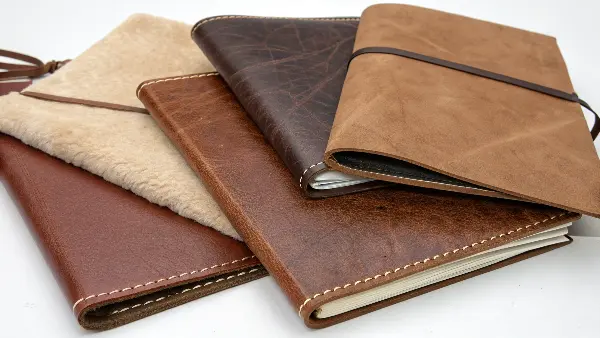
For a book like a Bible, which is often a lifelong companion, the choice of leather is critical. It determines not only how the book feels in your hands but also how it will stand up to years of study and handling. While many leathers can be used, professionals and artisans have favored a select few for centuries due to their unique properties. It’s a balance of toughness, flexibility, and aesthetic appeal.
Here’s a closer look at the go-to leathers in the world of high-quality bookbinding:
Top Leathers for Book Covers
- Goatskin (Morocco Leather): This is the undisputed king of binding leathers. It comes from goat hide and is known for its exceptional durability and suppleness. The natural grain is prominent and beautiful, and it resists scuffs and moisture better than other leathers. It is strong yet flexible, so it doesn’t crack at the hinges. It’s the top choice for premium Bibles meant to be used daily and passed down through generations.
- Calfskin (Vellum/Parchment): Calfskin is incredibly smooth and has a luxurious, soft feel. Its fine grain provides a perfect canvas for intricate gold tooling and blind embossing, allowing for very detailed designs. While not quite as tough as goatskin, high-quality vegetable-tanned calfskin is very durable and ages beautifully. It’s often used for decorative, high-end presentation Bibles and classic literature.
- Sheepskin (Skiver): Sheepskin is softer and generally more affordable than goatskin or calfskin. It can be dyed in a wide range of vibrant colors and has a pleasant feel. However, it is not as strong and is more prone to scuffing and tearing. Because of this, it is typically used for less expensive bindings or for books that won’t see heavy, daily use. Some suppliers may use a thin layer of sheepskin (called "skiver") over a board, which offers the look of leather without the durability.
While cowhide is a common leather, its thickness and stiffness often make it less ideal for the delicate folds of a book cover compared to these more traditional options. When we develop a product line, we always start by asking about its intended use. For an everyday Bible, goatskin is a wise investment. For a commemorative gift, calfskin offers unmatched elegance.
What are the different types of leather bindings?
You have selected the perfect leather, but the work is only half done. The construction method used to attach the cover to the book block is just as important as the material itself. A beautiful leather cover is useless if the pages start falling out after a year. Many buyers overlook binding, leading to quality issues down the line. Understanding the difference between a durable sewn binding and a cheap glued one is critical.
The main types of leather bindings are defined by how the cover is constructed and attached. "Smyth-sewn" is the gold standard, where pages are stitched together in signatures, allowing the book to lay flat. "Case-bound" books have their block glued into a separately made cover. "Edge-lined" bindings offer maximum flexibility, with the leather cover folded around the book block. Finally, "bonded leather bindings" refer to the material itself and are typically paired with cheaper, glued construction methods.
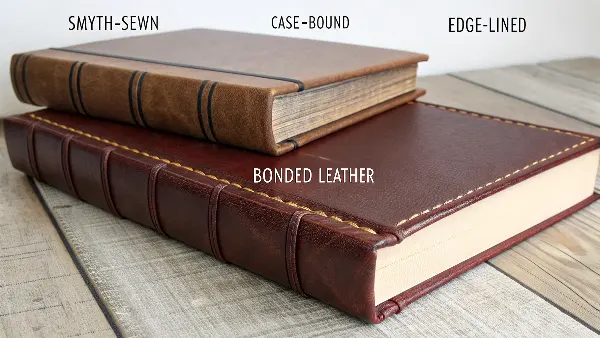
The binding method directly impacts the Bible’s durability, usability, and lifespan. A Bible that can’t open fully or lay flat on a table is frustrating to use. One with a weak spine will quickly fall apart. As a manufacturer, we see this as a core quality feature. When I evaluate a production sample, the first thing I do is open it to the middle and see if it lays flat. This simple test speaks volumes about the craftsmanship inside. A lay-flat binding isn’t a luxury; for a frequently used book like a Bible, it’s a necessity.
Let’s explore the key binding styles you should know.
Key Binding Construction Methods
- Smyth-Sewn Binding: This is the hallmark of a high-quality book. The pages are folded into groups called signatures, which are then stitched together through the spine. This durable construction allows the book to lay completely flat from Genesis to Revelation. It is the most durable method for a book that will be opened and closed thousands of times. Look for this specification when sourcing any premium Bible.
- Edge-Lined Binding: This is a technique used in the most premium, flexible Bibles. Instead of being glued to a stiff paperboard, the leather cover is directly attached to the book block’s endpapers and folded over the edge. This creates an incredibly supple binding that can be rolled up without damage. It requires immense skill and is found only on the highest-end products.
- Case Binding: This is a very common method in hardcover book production. The book block (the sewn pages) is created separately from the "case" (the cover). The block is then glued into the case using endpapers. While a Smyth-sewn case-bound book is still very durable, it is generally stiffer than an edge-lined binding and may not lay as flat initially.
- Perfect Binding (Glued Spine): This method should be avoided for a quality leather Bible. In a perfect-bound book, the individual pages are cut and glued directly to the spine. This is a fast and inexpensive method, but the glue becomes brittle over time, causing pages to fall out. It is unsuitable for a book intended for long-term use.
The best combination for a durable, usable, and premium Bible is a full-grain leather cover with a Smyth-sewn, edge-lined binding. This trifecta delivers the ultimate experience in both feel and function.
What is the best leather for binding a Bible?
After reviewing all the factors, we arrive at the most important question for any buyer: what is the absolute best leather for a Bible? You want to offer a product that stands out for its quality and longevity. Choosing the right leather means investing in a material that not only protects the sacred text but also enhances the reader’s experience through its touch and feel. Making the right choice is your final step to sourcing a truly exceptional product.
The best leather for binding a Bible is full-grain goatskin, often referred to as Morocco leather. Goatskin offers an unparalleled combination of softness, flexibility, and strength. It has a beautiful, natural pebbled grain that resists scuffs and hides wear, and it is supple enough to allow the Bible to lay flat easily. Its durability ensures the binding will last for generations, even with daily use, making it the top choice for premium, heirloom-quality Bibles.
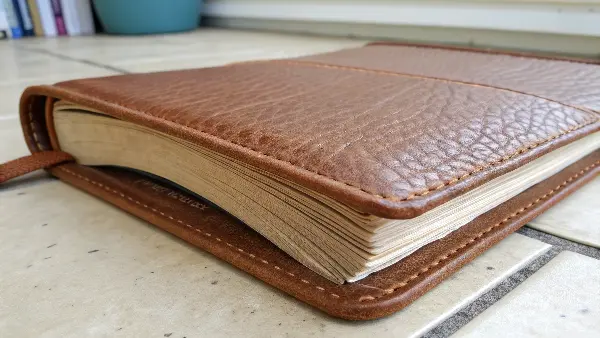
While other leathers like calfskin are excellent for their smooth finish and tooling capabilities, goatskin’s practical resilience sets it apart for a book that is meant to be a constant companion. It is the material of choice for the world’s leading Bible publishers for a reason. I always advise clients that if they want to create a "flagship" Bible for their product line, starting with high-quality goatskin is the surest path to success. The material itself communicates quality before the customer even opens the book.
So why does goatskin consistently outperform other options?
Why Goatskin is the Premium Choice
- Unmatched Durability: The fiber structure of goatskin is denser and more tightly interwoven than cowhide or sheepskin. This gives it incredible tensile strength and tear resistance. A goatskin cover can withstand being bent, flexed, and handled daily for decades without cracking or weakening at the hinges—the most common point of failure in a book.
- Supple and Flexible: Despite its strength, goatskin is remarkably soft and supple. This flexibility is what allows for the construction of "lay-flat" and "edge-lined" bindings. A Bible bound in goatskin will open easily and stay open on a desk or lap without needing to be held down, which is a huge benefit for study and reading.
- Beautiful, Natural Grain: Goatskin has a distinctive, pebbled grain that is both visually appealing and practical. This natural texture helps to hide minor scuffs and scratches that accumulate over time. Over years of use, it develops a rich patina, a soft sheen that enhances its beauty, rather than just looking worn out.
- Rich History and Prestige: For centuries, goatskin (Morocco leather) has been the choice for binding the most important books. Its use immediately signals a premium product made with traditional craftsmanship. For customers seeking an heirloom-quality Bible, the presence of goatskin is a powerful selling point.
While a premium goatskin Bible comes at a higher cost, the value it delivers in terms of lifespan and user experience is unmatched. For a product as personal and significant as a Bible, it is an investment in quality that discerning customers are willing to make.
Conclusion
Sourcing a high-quality leather Bible comes down to understanding the interplay between materials and craftsmanship. From distinguishing full-grain goatskin from bonded leather to recognizing the superiority of a Smyth-sewn binding, every detail matters. By focusing on these key quality markers, you can confidently source Bibles that are not only beautiful but are built to last a lifetime.
